
Insights: The Best Books I've Read So Far In 2026
Every year, like the completist geek I am, I keep a record of every book I read. Here are the five I've enjoyed the most so far in 2026.

A quick reminder - buy any of my recommendations from my Looking Sideways book store (and plenty of you are doing so!) and you’ll be buying directly from independent UK book stores (which means your money won’t be helping to finance the next ghoulish Bezos-sponsored Met Gala, for one) as well as helping support Looking Sideways (I get a 10% commission) in a really simple and (I humbly propose) righteous way.
Get involved here and you can also join my Chat and share your own reads below. We’re racking ‘em up! Come and join us…
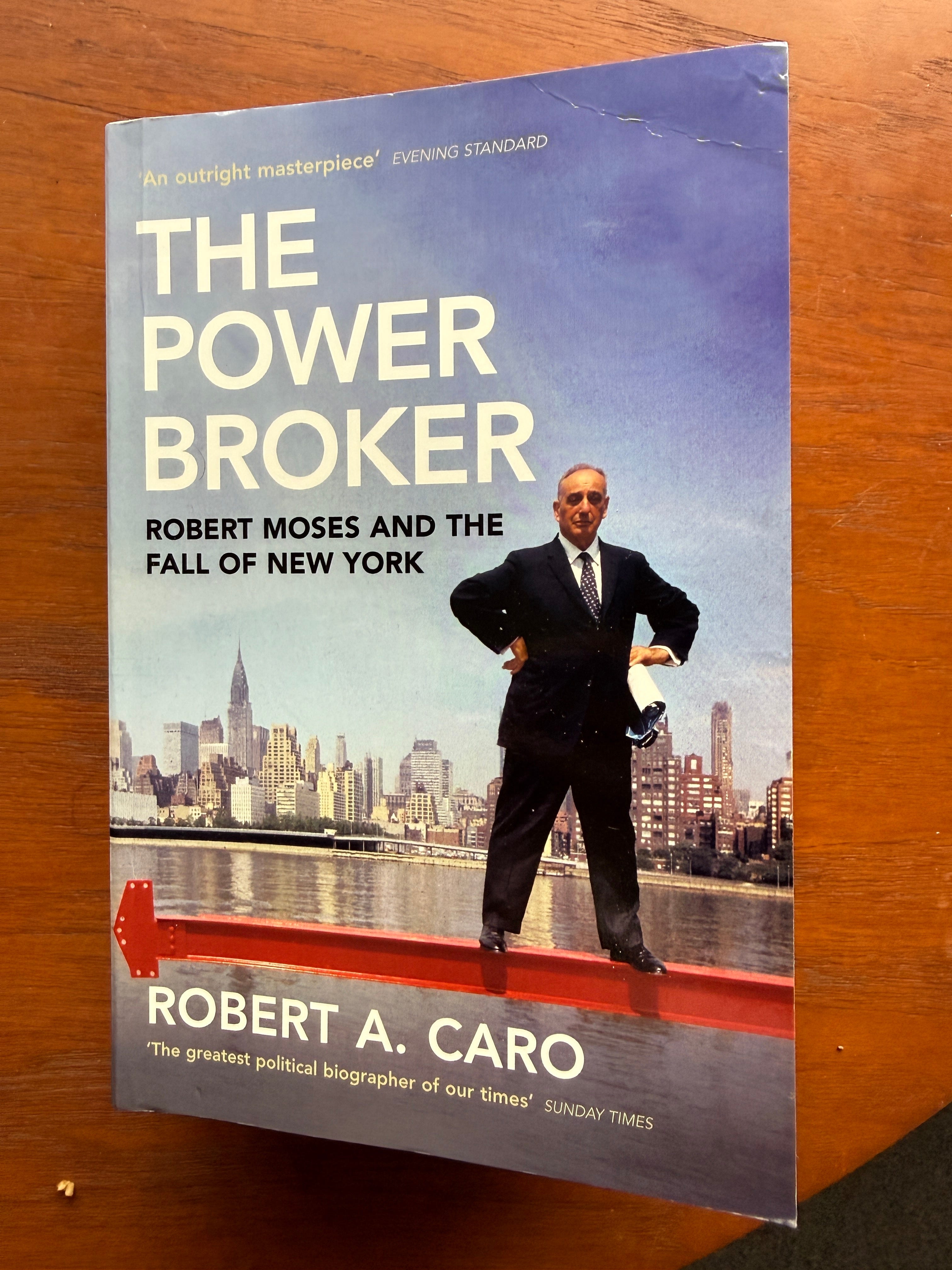
1. The Power Broker: Robert Moses and the Fall of New York, by Robert A. Caro
In the years I’ve been recommending books to Looking Sideways listeners and readers, I’d like to think I have a pretty solid hit rate. There has been, however, one controversy, and it came as a result of my August 2022 conversation with the great skateboarding filmmaker and entrepreneur Stacy Peralta:

Stacy was in town to promote his Patagonia-backed documentary The Yin and Yang of Gerry Lopez, and the interview took place, in classic junket style, in the East London hotel room that was his home for the duration of his stay.
These things are always a little awkward, and as long-term listeners will recognise, I’m always searching for some common ground or shared interest to bridge the gap that exists between interviewer and subject - especially with an old hand like Peralta, who has been asked the same questions countless thousands of times.
Early in the conversation, I clocked Stacy as a classic autodidact: somebody in love with creativity and learning for their own sake, who had obviously spent his life happily following the threads of his own curiosity, wherever they happened to lead.
That’s also the trait of the voracious reader. So towards the end of our chat I asked him to recommend a recent favourite book.
It’s the type of question I’d usually reject as too cringingly on-the-nose, but I was genuinely interested, and hoped it would prompt a fellow book geek to share his latest passion (as anybody who follows me on Instagram will know, we need little excuse):
Anyway, if you’ve listened to the episode, you’ll probably remember the delight in my voice when Stacy responded by extolling the virtues of The Rise and Fall of the Third Reich, William Shirer’s legendary history of the Nazi party.
As it happens, I’ve read this classic of post-war non-fiction twice - and I’d finished my second reading mere weeks before our meeting.
So it was that the two of us spent the last ten minutes of the conversation merrily exchanging notes on this most pleasurable of reading experiences, and swapping other book recommendations. (Think what you will about Looking Sideways, but you sure don’t get that with The Bombhole or The Nine Club.)
I published the episode (which, as you might expect, attracted a large listenership) and thought little of it. That is, until I began to receive messages from listeners who’d bought their own copy of Shirer’s classic and were, shall we say, REALLY not enjoying it. (Four years later, I’m still receiving them.)
All of which is a very long-winded way of saying: if you didn’t enjoy The Rise and Fall of The Third Reich, you are unlikely to enjoy The Power Broker, Robert Caro’s 1,110-page biography of New York civil servant Robert Moses, which so far is the best book I’ve read in 2026 (or rather, am reading - 800 pages in, I already know it’s the winner thus far).
Of course, describing this magisterial (I’m almost embarrassed to use such an obvious adjective, but really, what else is there?) non-fiction opus merely as the biography of a New York civil servant is, to paraphrase an erstwhile review of Looking Sideways itself, “a little like describing Moby Dick as ‘just’ a book about a load of men chasing a whale in a boat.”
Because The Power Broker is much, much more than that. It’s a social history of American immigration. A gripping, labyrinthine examination of New York politics. A sprawling account of New York the modern city, and the violence upon which it was founded. A clear-eyed history of endemic, institutional, cross-generational racism. And a generation-spanning soap opera that more than earns the comparisons with Tolstoy or Steinbeck.
It is also, as the subtitle suggests, a history of power - specifically its execution, and how it corrupts even the seemingly incorruptible. Little wonder no less an authority than Barack Obama says it “shaped how I think about politics.”
Above all, though, it’s one of the most pleasurable reading experiences I’ve had in as long as I can remember, thanks to Caro’s masterly style and his remarkable ability to marshal these seemingly infinite themes into a satisfying, coherent and authoritative whole.
Does this mean I’ll be inspired to follow it with Caro’s multi-volume (!) history of Lyndon Baines Johnson, which online Caro stans (yes, they very much exist) assure me is even better? Frankly, I’m a little scared. But never say never.
(And yes, I have recommended this book to Stacy Peralta.)
More here.
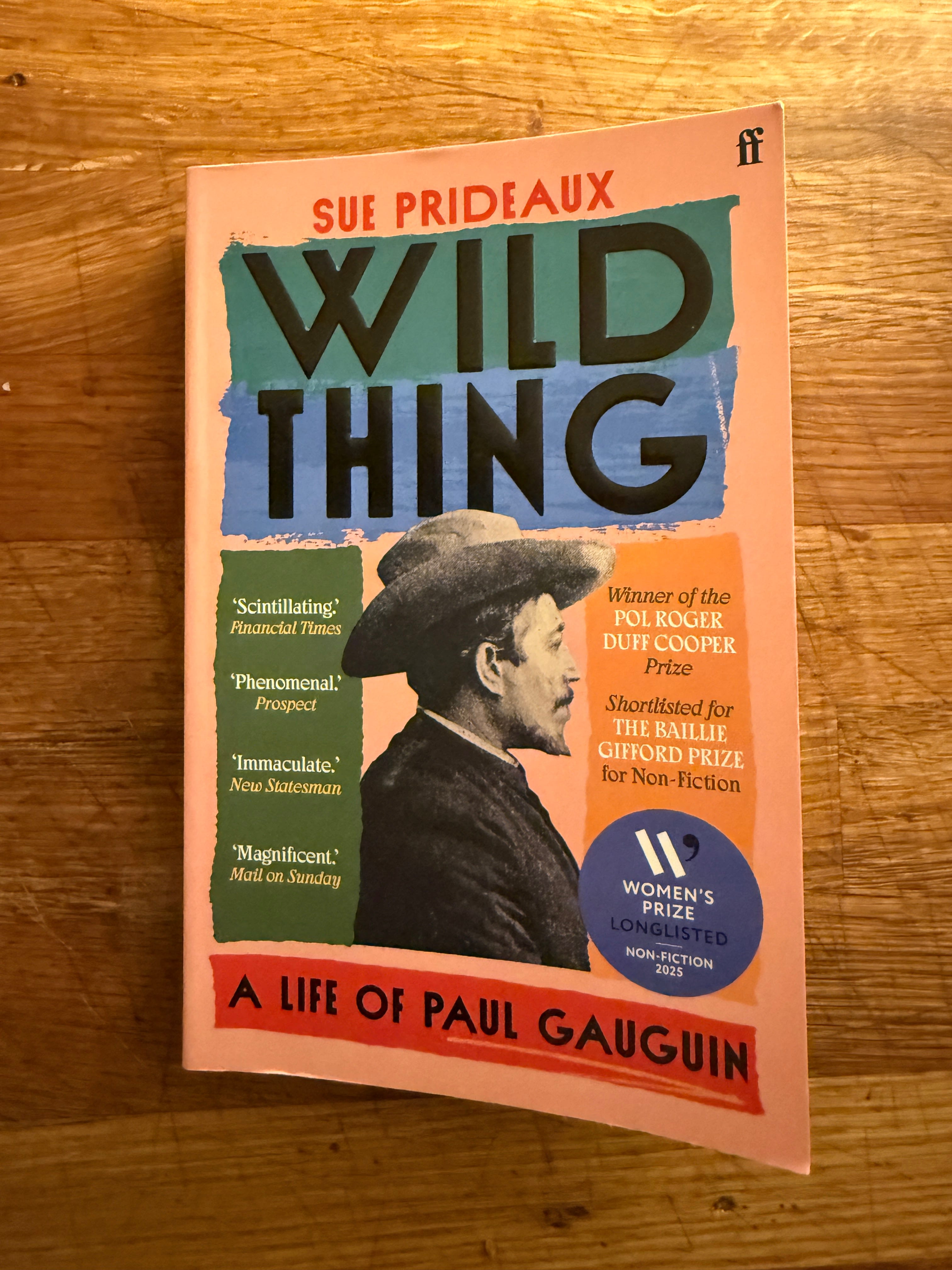
2. Wild Thing, by Sue Prideaux
In a recent newsletter I quoted in last week’s 10 Things, Joel Snape has a neat riff on what he calls ‘mansplaining yarns’ - the type of pacy, narrative non-fiction that writers like Patrick Radden Keefe, David Grann, Sebastian Junger, John Vaillant and Robert Caro (Joel’s piece is where I first heard of The Power Broker) specialise in.
But if you ask me, Sue Prideaux trumps them all. As regulars will know, I loved I Am Dynamite!, her biography of Nietzsche, so much that I wrote a very lengthy blog post about it:

I decided from that point I’d read anything she writes, and her wondrous new biography of Paul Gauguin, about whom I knew nothing before I picked this up, settled the case: there are very few non-fiction writers doing it quite like Sue.
She has THE most beautiful and enviable style; an ability to convey difficult ideas with humour and affectionately-rendered irony; and a compassion for her subjects that is infectious and, at times, very moving.
I can’t recommend her work highly enough, and her loving, affectionate tribute to Gauguin is a great place to start.
More here.
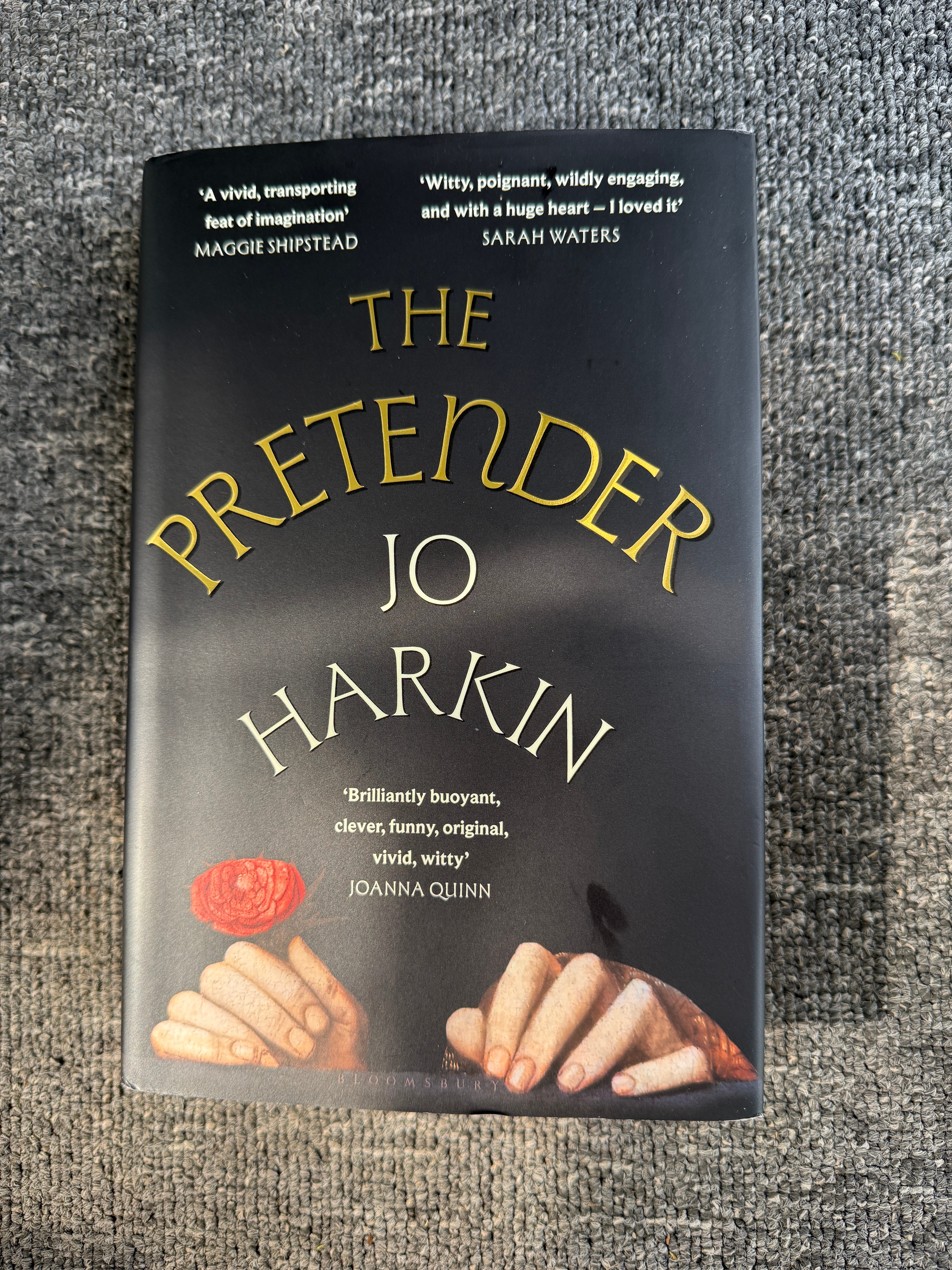
3. The Pretender, by Jo Harkin
Every December, I’ve got into the habit of reading through the main Books of the Year features in each of the big papers and websites for things I might have missed. It’s a great way of discovering new writers, especially as these days I have a good feel for what I’ll find interesting.
That’s how I heard about The Pretender, and when I read the notices - “Wolf Hall meets Demon Copperhead” is fairly typical - I could not have been more in.
And The Pretender, a Bildungsroman set during the Wars of the Roses, is one of my favourite novels of the last few years. It’s funny, kinda saucy (is it a medieval ‘romp’? I think it is), historically fascinating, and wears its not inconsiderable cleverness very lightly indeed.
Tonally, “a Plantagenet Adrian Mole” (another of those end-of-year notices) very much fits the bill. Above all, it’s everything I want from a novel: endlessly immersive, and with characters I rooted for. I was sad when it was over.
More here.
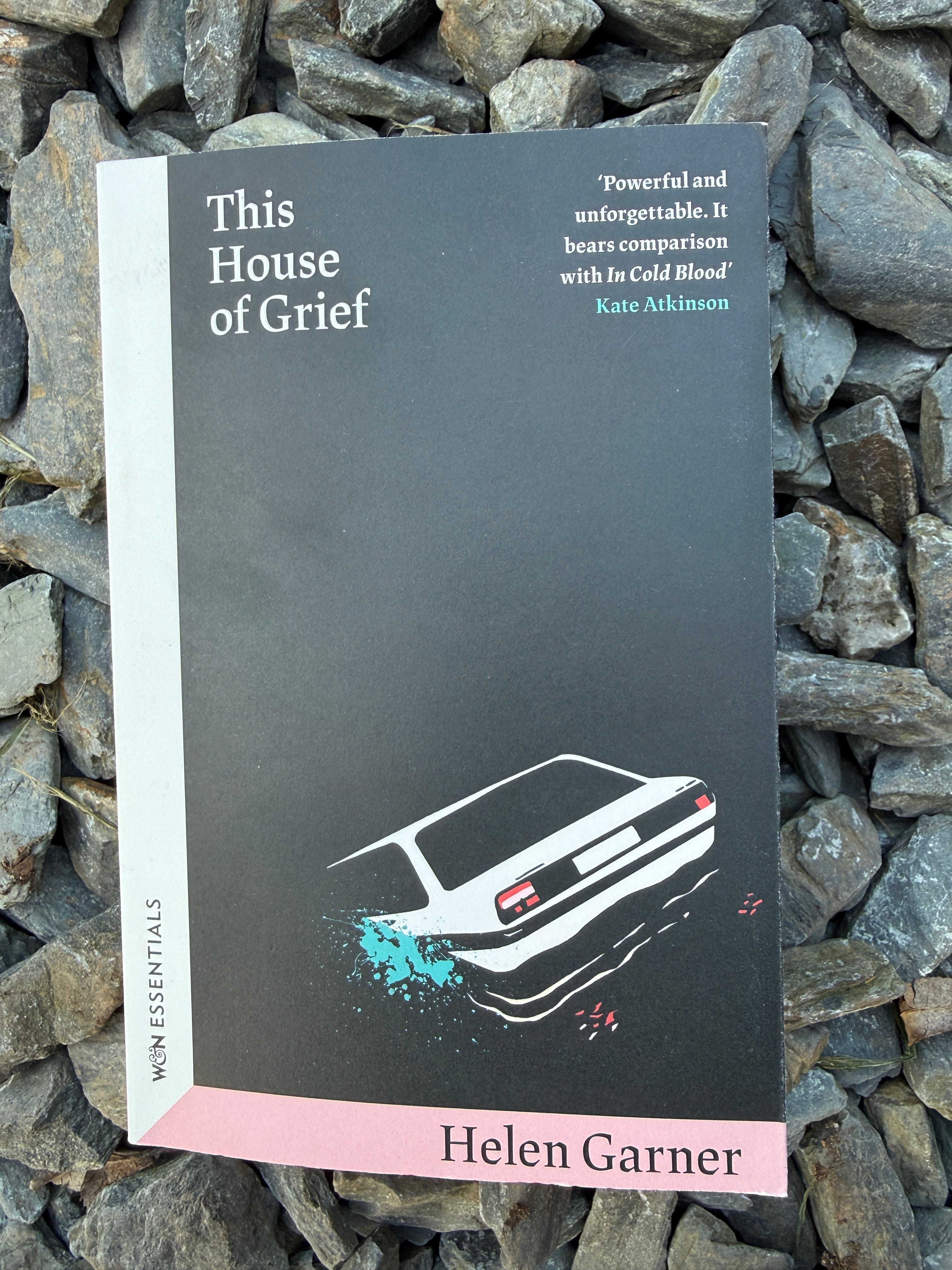
4. This House of Grief, by Helen Garner
Helen Garner’s collected diaries, How To End A Story, just won the Baillie Gifford, non-fiction’s equivalent of the Booker.
This 2014 non-fiction classic, which I’d been meaning to read for years, comes with an equally towering reputation. Truman Capote’s In Cold Blood is a fairly typical comparison, and you can understand why: both books follow ghastly murder trials through to their unsettling, harrowing conclusions.
Garner’s territory, like Capote’s, is the unspoken hinterland of human experience, and her account of the trial of Robert Farquharson - accused of deliberately driving his three children, Jai, Tyler and Bailey, to their deaths in a dam - takes us right to the edge.
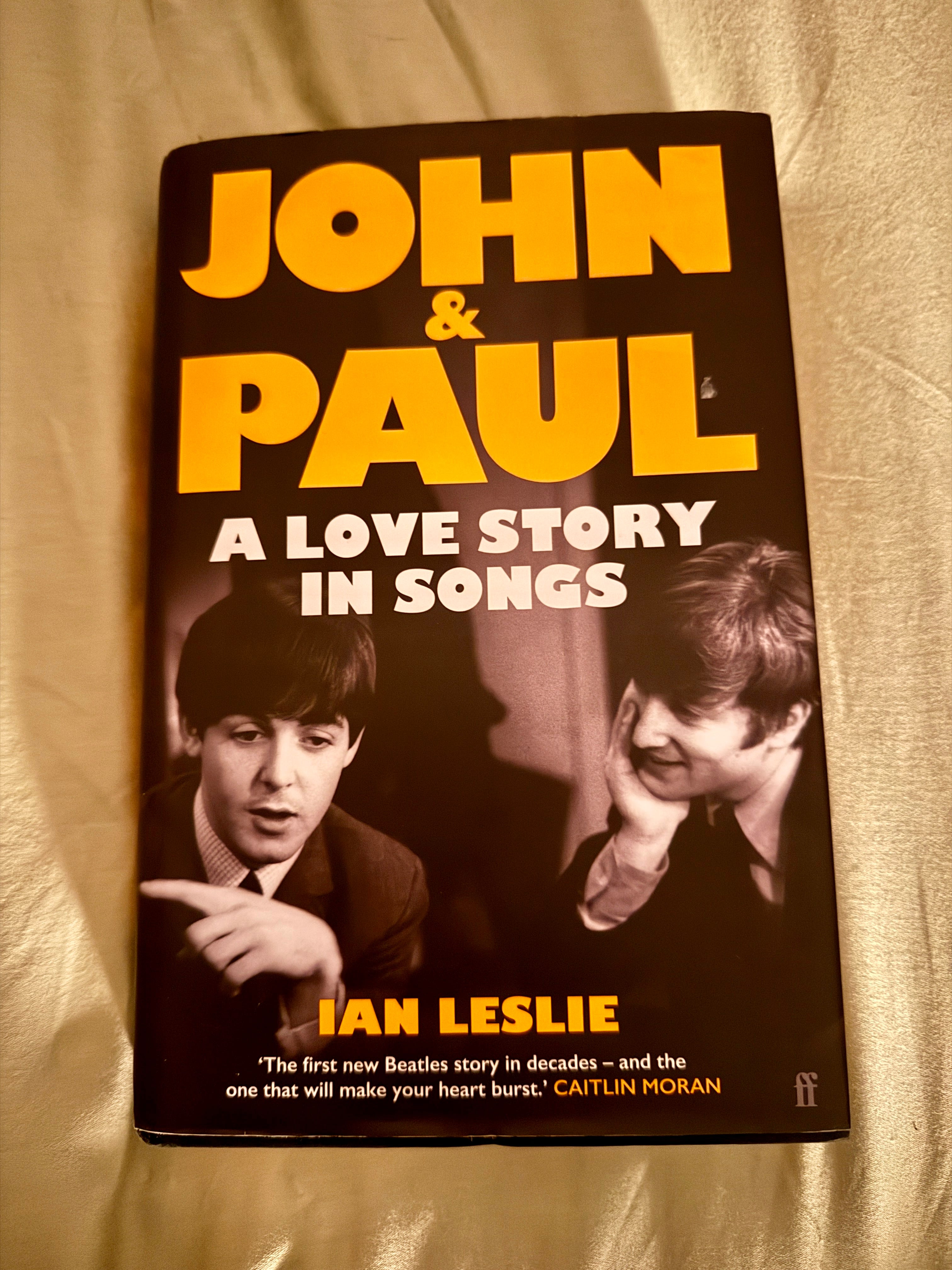
5. John and Paul: A Love Story in Songs, by Ian Leslie
Whisper it, but we’re at the beginning of yet another ‘new’ Beatles era.
I’ve been thinking about this since finishing Ian Leslie’s John and Paul: A Love Story in Songs, a book that got me mulling over things I have, in hindsight, been thinking about for … well, decades.
I should probably qualify all of this upfront. I’ve been an avid, card-carrying Beatles geek since I read Albert Goldman’s The Lives of John Lennon at the age of 16, and I’ve basically never recovered. Since then, I’ve read everything of note, watched every doc, and pored over every song (and at this point, for what it’s worth, I am firmly Team Paul).
One thing I’ve observed over almost four decades of close Beatles study is that Fab Four sentiment comes in waves, and it’s my humble contention that we’re at the beginning of another period when an entire new generation will discover them anew (as every generation inevitably does).
Personally, I think this particular revival began four years ago with the release of Peter Jackson’s Get Back series. It continues this year, with the reissue of the Beatles Anthology, the new McCartney/Wings doc, and Jim Windolf’s recently released Where The Music Had To Go, a new book on the Dylan/Beatles relationship.
And it will go properly stratospheric once Sam Mendes’ forthcoming Beatles four-parter (!) starring Paul Mescal and Barry Keoghan is finally released.
Ian Leslie’s book is best viewed as part of this ongoing lineage of Beatles storytelling. But before I get to my thoughts on it, I’d like to get something off my chest: I fundamentally don’t trust anybody who says the Beatles are over-rated.
Why? Because it was a lazy, pseudo-edgy thing to say when the writers of This Life gave the line to Anna as a way of signifying what a fearless slayer of sacred cows she was. And that was thirty years ago.
In a way it reminds me of the recent brouhaha around Chalamet and his clunky, cringe-inducing take on the virtues of opera and ballet. Whenever I hear somebody say something like this, I’m reminded of something I think is basically true: some cultural things have accrued such weight and significance that your own personal reaction to them is, frankly, not that relevant. Or required.
That’s why saying the Beatles are over-rated is like saying Sylvia Plath is over-rated. Or Mark Rothko. Or Virginia Woolf. Or Leonard Bernstein. Or ballet. Or opera.
They might not be ‘for you’, to borrow Austin Kleon’s elegant phrase. But to dismiss their significance is just silly. These universal cultural influences have existed for so long, and enriched so many lives, that at some point they rightly transcend the milieu of localised opinions espoused by dickheads on the internet.
(I’m aware, of course, that one of the transformative things about t’internet is the way that - if you like - gatekeeperish opinions like ‘the Beatles are above criticism’ have been forcibly dismantled by the democratisation of online discourse.
But I don’t think that changes the underlying truth of what I’m saying - which is that saying the Beatles are over-rated, at this point, is to reveal yourself as a fundamentally unserious person. And that’s before we get into the way being extremely online, all of the time, has encouraged us to have daft, unnecessary opinions about absolutely everything - which is, of course, another essay).
Anyway… I enjoyed Ian Leslie’s revision of the Beatles story. Like a warm bath at the end of a long day, there’s genuine pleasure in hearing these stories told so expertly. And Leslie’s central premise is a lovely and original one: that John and Paul wrote songs for each other, as expressions of their deep platonic love and the type of creatively charged friendship most of us will never experience.
Anybody who’s watched Get Back, especially the scene where John and Paul perform endless versions of Two of Us, will immediately recognise the kernel of truth at the heart of Leslie’s conceit.
Despite this, I did have an issue with A Love Story in Songs: which is the sheer amount of conjecture and authorial overreach that pervades the book. There’s an awful lot of “therefore, we can imagine Paul was thinking this when he wrote this line for John” propping up the argument, and as the book progressed I found it increasingly flimsy (and, to be honest, a tad self-satisfied).
More tellingly, I think it’s slightly cowardly that Leslie didn’t attempt to interview Paul McCartney, and I found his explanation (basically, that Paul’s views are on record, and they’re the ‘official’ and not that interesting version) a bit of a cop-out.
Sure, McCartney is a notorious, expert self-mythologiser who isn’t considered an especially reliable narrator of his own story. But he’d presumably have a view on whether he was trying to send John Lennon a message when he wrote, say, “the movement you need is on your shoulder.” This is Leslie’s central contention, and he never actually asks the one person who might confirm or deny it.
Overall, what Ian Leslie has going for him is that books like Revolution in the Head, Shout! and even The Lives of John Lennon have, at this point, largely been forgotten by anybody other than geeks like me. So he does get to offer a fresh take, which at this point is no small achievement. And if A Love Story in Songs helps a new generation understand the importance of the Beatles, and reaffirms their position as the twentieth-century cultural giants they truly are, then that has to be a good thing.
Certainly, if you want to interrogate the claims I’ve made here, it’s a good place to start.
More here.
Read something I should add to my 2026 list? Any books you particularly enjoyed this year that you’d like to share? Just want to geek out on reading and books with other members of the Looking Sideways community? You know what to do….
Looking Sideways is reader-supported. If you fancy helping out, my partner discount codes (Finisterre, Db, Albion and more) live here, and buying anything from my book store supports the show too.
For those like me who haven't been able to bring themselves to crack The Power Broker, I recommend the 99% Invisible podcast series on the book. It's meant to be a book club for readers, but I just cheated and listened to the podcast! First episode includes an interview w/ Caro, which is worth a listen regardless of whether you continue the series.
Best of my reading year so far?
Stoner
Reading Lolita In Tehran
The Morning Star
The Passenger/Stella Maris